
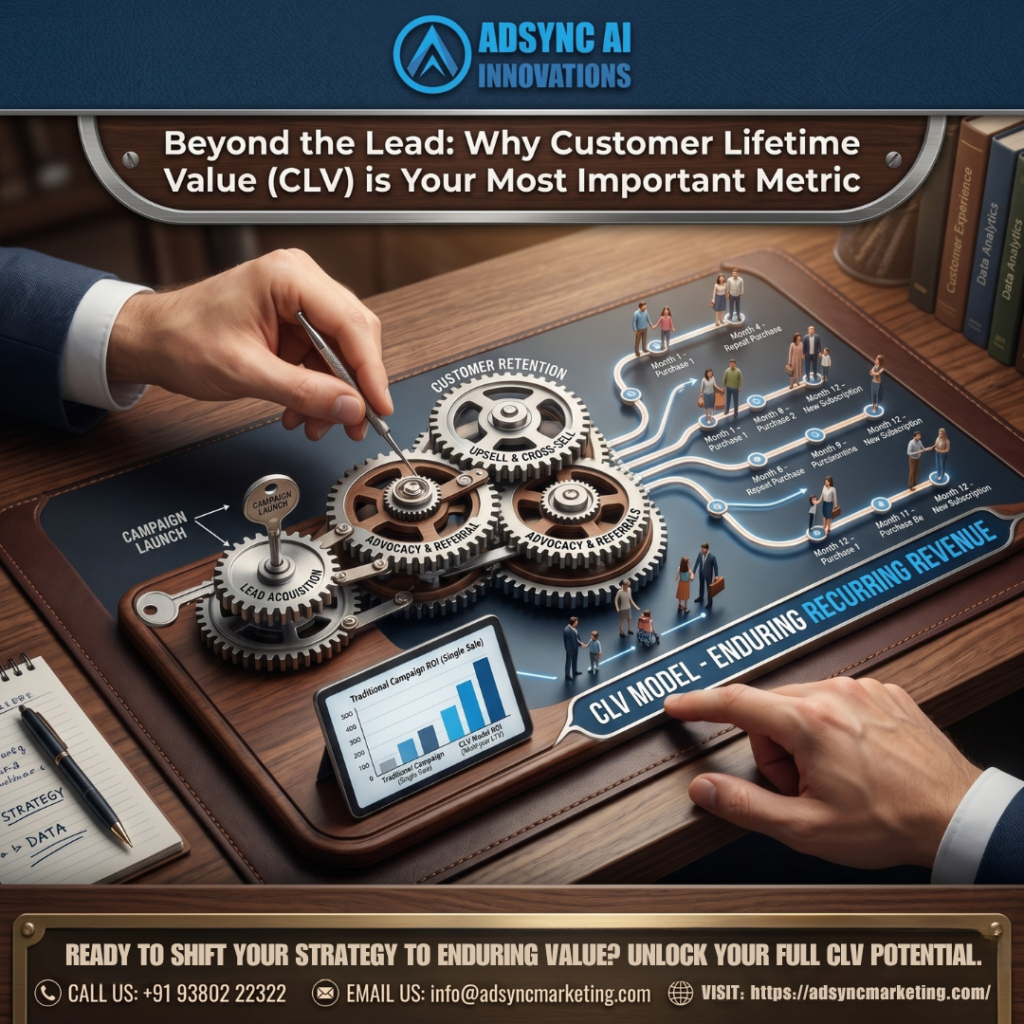
In the business world, we love the thrill of the chase.
When a brand-new lead enters the pipeline or a first-time buyer clicks “Checkout” on your website, it feels like a massive victory. We ring the sales bell, celebrate the win, and then immediately turn our backs on that new customer so we can hunt for the next one.
This is what we call the “Customer Acquisition Treadmill.” You are running as fast as you can, spending massive amounts of money on ads and SEO to bring in new business, but your overall revenue never seems actually to grow.
Why? Because you are treating marketing like a one-night stand instead of a long-term relationship.
If you want to build a truly scalable, highly profitable business, you have to look past the initial sale. You need to focus on Customer Lifetime Value (CLV). Here is why retaining your current customers is the ultimate growth hack, and how to keep them coming back for years to come.
TL;DR: The Quick Takeaways
- Acquisition is Expensive: It costs significantly more to convince a stranger to buy from you than it does to sell to someone who already trusts you.
- CLV Dictates Your Ad Budget: When you know a customer will spend money with you for years, you can afford to outspend your competitors to acquire them in the first place.
- Onboarding is Marketing: The first 30 days after a customer buys your product or service determine whether they will become a loyalist or a churn statistic.
- Your Email List is a Goldmine: Stop relying on social media algorithms to talk to your best customers. Use automated email flows to drive repeat sales.
1. The Math Behind the Magic: CAC vs. CLV
To understand why Customer Lifetime Value is so crucial, you have to compare it to your Customer Acquisition Cost (CAC)—the amount of marketing money you spend to get one new buyer.
Imagine you run a home services company, like a premium HVAC repair business. You spend ₹5,000 on Google Ads to acquire a new customer, and they pay you ₹8,000 to fix their air conditioner. Your profit margin on that single transaction is incredibly thin. If they never call you again, you are barely breaking even.
But what if you enroll that customer in a yearly maintenance plan? Over the next five years, they will pay you ₹15,000 annually. Plus, they buy a brand new ₹80,000 unit from you in year six.
That original ₹5,000 ad spend didn’t just generate an ₹8,000 sale; it generated ₹1,55,000 in Customer Lifetime Value. When your CLV is high, your marketing becomes an investment, not an expense.
The Action Step: Calculate your current CLV. Take your average order value, multiply it by the number of times a customer buys from you in a year, and multiply that by the average number of years they stay with you. If that number is uncomfortably low, you have a retention problem, not a traffic problem.
2. The First 30 Days: Nail the Onboarding
The biggest mistake businesses make is assuming the marketing stops once the credit card is swiped. In reality, the moment after the purchase is when the customer is most vulnerable to “buyer’s remorse.”
If you sell a complex B2B software, and a new client signs a massive contract but can’t figure out how to use the dashboard on day one, they will cancel. If someone buys a premium product from your e-commerce store and it arrives in a cheap, damaged box two weeks late, they will never buy from you again.
The Action Step: Audit your post-purchase experience. Send a personalized “Welcome” email immediately after a purchase. If you are a service provider, call the client three days after the project kicks off just to ensure they are happy. Make the onboarding process feel like a premium, white-glove experience.
3. Build a “Lifecycle” Email Marketing Engine
You cannot rely on Facebook or Instagram algorithms to stay in front of your past customers. You need a direct line of communication, and email is still the undisputed king of retention.
However, sending a generic, boring corporate newsletter once a month won’t cut it. You need automated lifecycle emails that trigger based on customer behavior.
The Action Step: Set up three automated email flows this week:
- The Cross-Sell: If someone buys a laptop, automatically send them an email three days later highlighting the perfect protective case for that specific model.
- The Replenishment: If you sell a consumable product (like premium coffee or skincare) that runs out in 30 days, send an automated reminder email on day 25 offering a simple one-click reorder link.
- The Win-Back: If a loyal customer hasn’t purchased anything in six months, send them an exclusive “We Miss You” discount code to reactivate their account.
4. Turn Customers into an External Sales Force
The highest-converting leads you will ever get are referrals. When a happy customer tells a friend or a colleague about your business, they are transferring their trust in you. Referral leads close faster, argue less about price, and have a higher CLV right out of the gate.
But you cannot just sit back and hope people talk about you. You have to incentivize it.
The Action Step: Create a formal referral program. Offer your current customers a tangible reward—a steep discount on their next invoice, a free month of software, or a gift card—for every new client they bring to your door. Make it incredibly easy for them to share a custom link with their network.
Get off the Acquisition Treadmill
Acquiring new customers is important, but retaining them is where real wealth is built. When you shift your focus from the first transaction to the lifetime relationship, you stop stressing over the daily cost of ads and start building a deeply sustainable, highly profitable brand.
Is your business leaking past customers? Stop leaving money on the table. The team at Adsync Marketing specializes in building automated retention strategies, email flows, and post-click experiences that maximize your Customer Lifetime Value.
- Call us: +91 93802 22322
- Email us: info@adsyncmarketing.com
- Visit: https://adsyncmarketing.com/