
We live in an era of instant gratification. You can order groceries and have them delivered to your door in 10 minutes. You can stream any movie ever made with a single click.
Because we are so conditioned to get things instantly, business owners often bring that same expectation to their digital marketing. They launch a brand-new website on Monday and expect the phone to ring off the hook by Friday. When it doesn’t, panic sets in. They start hunting for “growth hacks,” buying questionable email lists, or throwing massive budgets at aggressive, spammy ad campaigns.
While these aggressive tactics might generate a quick spike in metrics, they are actively eroding your business’s long-term credibility.
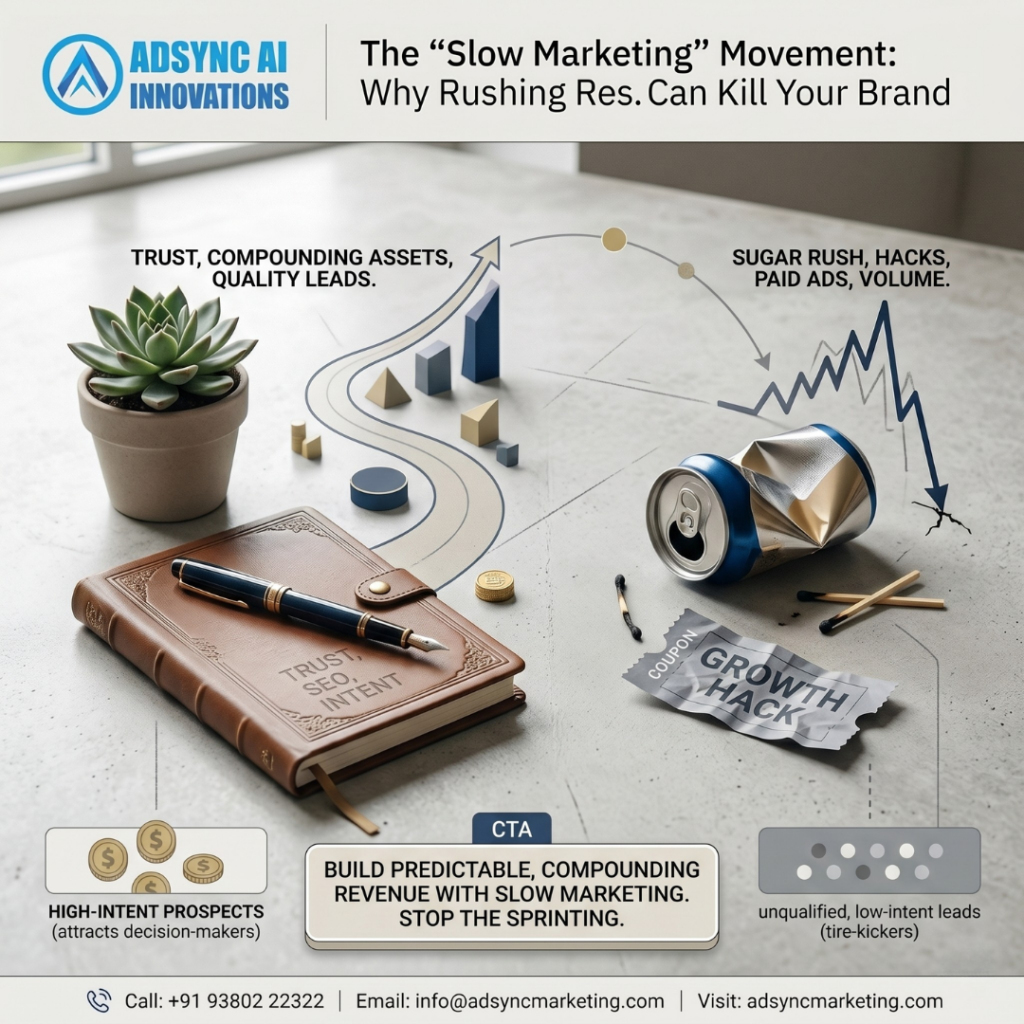
Enter the “Slow Marketing” movement. It is the counterintuitive strategy that the world’s most profitable brands use to dominate their industries. Here is why slowing down, focusing on human connection, and playing the long game is the ultimate growth hack for 2026.
TL;DR: The Quick Takeaways
- Trust Cannot Be Hacked: High-ticket clients do not buy on impulse. Forcing a sale too early makes you look desperate and untrustworthy.
- Beware the “Sugar Rush” Metrics: Viral hacks and aggressive discounts create a temporary spike in traffic, but rarely lead to sustainable revenue.
- SEO and Brand are Compounding Assets: Slow marketing methods compound over time, just as compound interest builds your website’s authority.
- Quality Outperforms Quantity: Sifting through 1,000 unqualified, low-intent leads is a waste of time. Slow marketing attracts 50 highly qualified, ready-to-buy prospects.
1. The Danger of the “Growth Hack” Addiction
When a business is desperate for revenue, they start looking for shortcuts. They buy a list of 10,000 cold email addresses and send generic sales pitches to them. They also put aggressive, full-screen pop-ups on their website that offer big discounts. They use automated bots to spam potential prospects on LinkedIn.
These tactics might accidentally catch a few desperate buyers, but at what cost?
For every one person who buys from an aggressive cold pitch, 999 people mark your email as spam, block your social media account, and mentally categorize your brand as “annoying.” You are burning your total addressable market just to hit a short-term quota.
Slow marketing means putting your brand’s reputation ahead of a quick, cheap click.
2. Trust is a Slow-Cooked Meal
Think about the buying cycle for a premium service. If you run a home renovation company and ask a homeowner to trust you with a ₹25,00,000 kitchen remodel, they are not going to click a Facebook ad and hand over their credit card five minutes later.
High-ticket sales require a great deal of trust. Trust is not built through a clever ad headline; it is built through consistent, reliable, and helpful interactions over time.
Slow marketing means making a digital environment where potential customers can learn about you at their own pace. This means writing high-quality blog posts that answer their questions, posting videos of your team working on real homes behind the scenes, and showing verified reviews. You have to be patient enough to let the potential customer convince themselves that you are the right choice.
3. The Compounding Interest of SEO and Content
Fast marketing relies entirely on paid ads. The moment you stop spending ₹50,000 a month on Google or Facebook, your traffic instantly drops to zero. You are essentially renting your audience.
Slow marketing focuses on building owned assets. When you invest time and resources into a comprehensive Search Engine Optimization (SEO) strategy, the results are notoriously slow. It might take three to six months to see your pages climb to Page One of Google.
However, once you get there, that piece of content acts like a digital salesperson working for you 24/7, for free.
A well-written, highly optimized blog post published today can still drive high-quality leads to your business three years from now. That is the power of compounding effort.
4. Focusing on the “Right” Leads, Not “More” Leads
The fast marketing approach is obsessed with volume. The goal is to drive 10,000 people to the website by any means necessary, even if it means using clickbait headlines or misleading promises. The result? Your sales team spends hours on the phone with people who have no budget, no real interest, and no intention of buying.
Slow marketing is obsessed with intent.
If you run a B2B software company, you don’t need 10,000 random website visitors. You need 200 visitors who are actively experiencing the exact problem your software solves. By slowing down and creating deeply specific, highly valuable content (like whitepapers, detailed case studies, and live webinars), you act as a filter. You naturally repel the tire-kickers and attract the exact decision-makers you want to work with.
Stop Sprinting in the Wrong Direction
Sustainable business growth is a marathon, not a sprint. If you constantly chase the newest, shiniest marketing hack, you will exhaust your budget and your team without ever building a solid foundation. When you slow down, prioritize human connection, and build systems based on trust, the revenue naturally follows.
Are you exhausted by the constant hustle for cheap, low-quality leads? It is time to step off the treadmill. The team at Adsync Marketing specializes in building sustainable, long-term strategies that compound over time and generate predictable, high-ticket revenue.
- Call us: +91 93802 22322
- Email us: info@adsyncmarketing.com
- Visit: https://adsyncmarketing.com/