
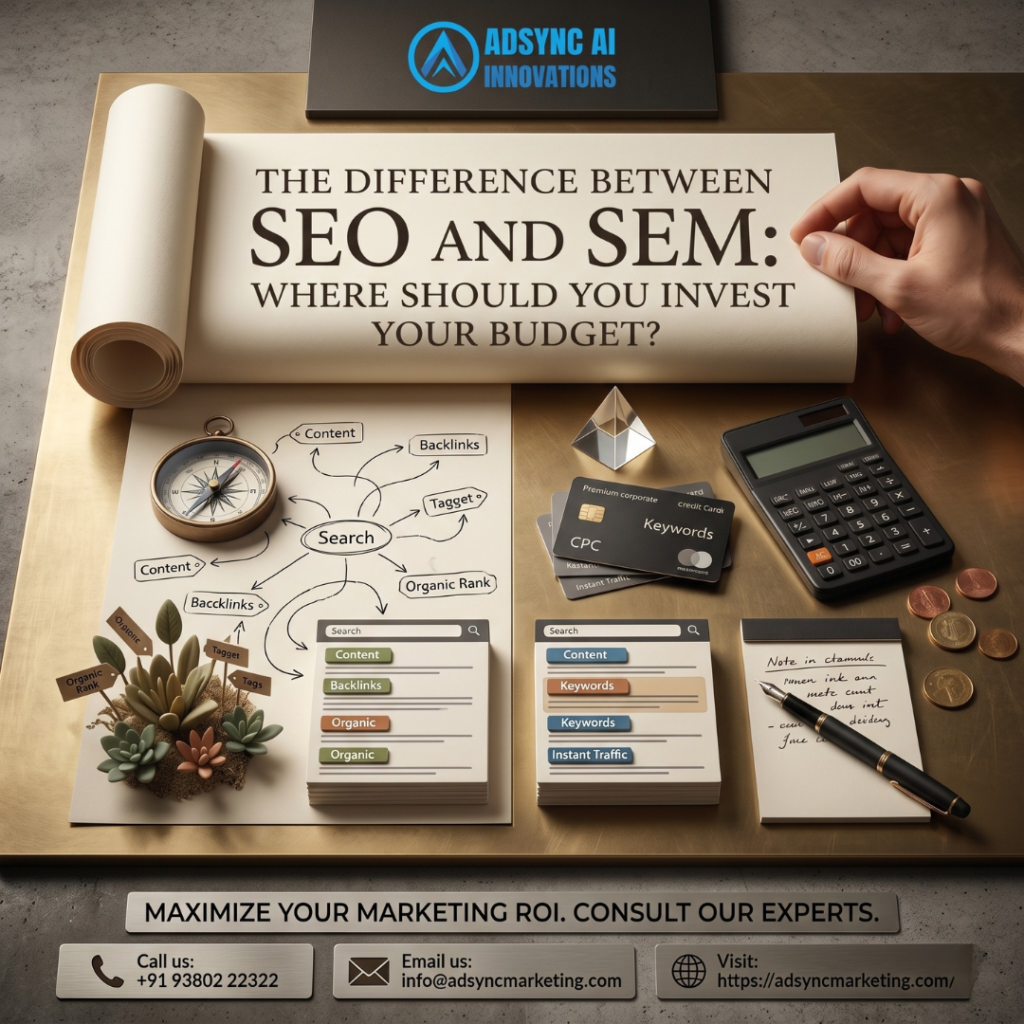
You are sitting in a marketing meeting, trying to figure out how to get your business to the top of Google. One consultant tells you to invest heavily in SEO. Another agency pitches you a comprehensive SEM package.
They sound almost identical. They both involve search engines. They both promise to drive traffic to your website. But choosing the wrong one at the wrong stage of your business growth is a surefire way to drain your marketing budget and frustrate your sales team.
The digital marketing world loves acronyms, but business owners need plain English.
SEO (Search Engine Optimization) and SEM (Search Engine Marketing) are two entirely different beasts. One is a marathon that builds massive, long-term wealth. The other is a sprint that generates immediate cash flow. Here is the exact difference between the two, and how to decide where your next Rupee should go.
TL;DR: The Quick Takeaways
- SEO is Earned, SEM is Paid: SEO focuses on ranking organically (for free), while SEM involves paying Google every time someone clicks your ad.
- The Real Estate Analogy: SEO is like buying a house and building equity over time. SEM is like renting a luxury apartment—it is great right now, but you own nothing when the lease ends.
- Speed vs. Sustainability: SEM can get you on Page One of Google by tomorrow morning. SEO might take six months to do the same thing.
- The Best Strategy Uses Both: Smart businesses use SEM to generate immediate sales today, while simultaneously building their SEO to lower their acquisition costs tomorrow.
1. What is SEO? (Building Digital Equity)
Search Engine Optimization (SEO) is the process of optimizing your website’s content, code, and authority so that Google can show it to users organically. You do not pay Google for this traffic.
Let’s say you own a B2B software company in Bengaluru. If you write an incredibly detailed, highly optimized 2,000-word guide on “How to Automate HR Workflows,” and Google ranks it at the #1 spot, you might get 500 visitors a day. You pay exactly ₹0 per click.
The Pros of SEO:
- Compounding ROI: Once you rank, that piece of content acts like a free 24/7 salesperson for years.
- Massive Trust: Consumers are smart. They know which links are ads and which are organic. People inherently trust organic results more because you earned that spot through expertise, not by opening your wallet.
The Cons of SEO:
- It is a Slow Game: SEO is a long game. It can take 3 to 6 months of consistent effort before you see any significant movement in your rankings. It requires extreme patience.
2. What is SEM? (The VIP Fast Pass)
Search Engine Marketing (SEM), more commonly known as Pay-Per-Click (PPC) or Google Ads, is how you bypass the line.
Instead of waiting six months to rank organically, you simply bid on a keyword. You tell Google, “I will pay you ₹150 every time someone searches for ‘HR Automation Software’ and clicks my link.” Google places your link at the very top of the page, above all the organic SEO results, with a little “Sponsored” tag next to it.
The Pros of SEM:
- Instant Gratification: You can build a campaign tonight, launch it tomorrow morning, and have a booked sales call by tomorrow afternoon. It is the fastest way to test a new product or generate immediate cash flow.
- Hyper-Targeting: You can tell Google to show your ad only to people searching between 9:00 AM and 5:00 PM who are within a 50-kilometer radius of your office.
The Cons of SEM:
- You Are Renting: The moment your credit card maxes out or you turn off the campaign, your website vanishes from Page One. You built zero permanent equity.
3. The “Trust” vs. “Intent” Dilemma
So, which one wins? It depends entirely on what your buyer is thinking.
If a consumer is in the “research phase”—meaning they are just looking for information and aren’t ready to buy yet—they will almost always scroll past the ads and click the organic SEO results. They want unbiased education.
However, if a consumer is in the “buying phase” with high commercial intent, SEM is king. If the pipes in their house just burst and water is flooding their living room, they are not going to scroll down and read a 2,000-word SEO blog post about the history of plumbing. They are going to click the very first ad they see that says “24/7 Emergency Plumber – Call Now.” ## 4. The Ultimate Strategy: The “Bridge” Method
The most profitable companies in 2026 do not choose between SEO and SEM; they use them together to create an inescapable digital net.
If you just launched a brand new website, your organic SEO traffic is going to be zero. You cannot afford to wait six months to make a sale.
The Action Step: Use the “Bridge” method. Allocate 70% of your budget to SEM right now. This buys you immediate traffic, generates leads, and keeps the lights on. Invest the remaining 30% in SEO content. Six months from now, as your organic traffic finally starts to climb, you can slowly lower your ad spend. The SEM acts as a bridge, sustaining your business until your SEO takes over.
Stop Guessing. Start Growing.
Choosing between SEO and SEM isn’t about which marketing tactic is “better”—it is about intimately understanding your business goals, your cash flow, and your timeline.
Are you tired of pouring money into search engines without understanding the strategy behind it? The team at Adsync Marketing specializes in building holistic search strategies. We run high-converting SEM campaigns to get you leads today, while building an ironclad SEO foundation to secure your dominance tomorrow.
- Call us: +91 93802 22322
- Email us: info@adsyncmarketing.com
- Visit: https://adsyncmarketing.com/