
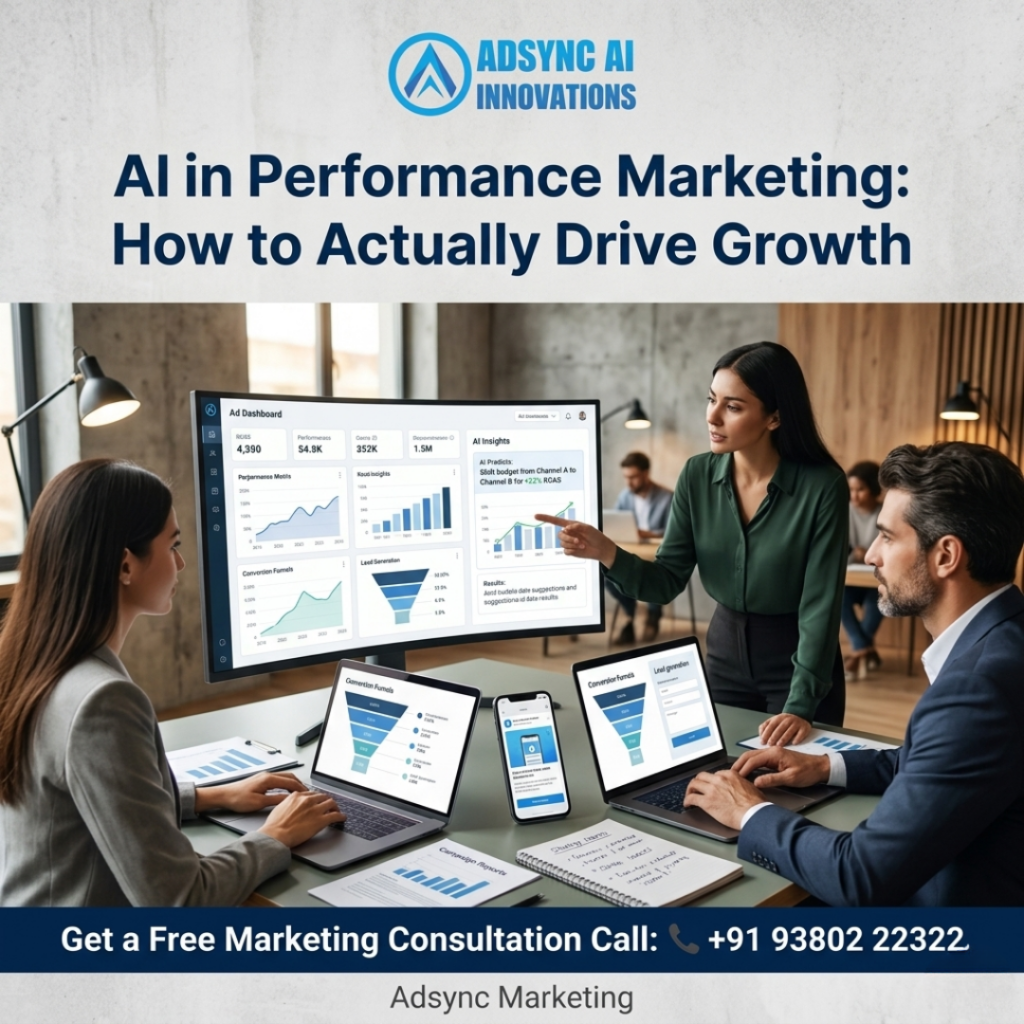
If you spend time on LinkedIn, you have probably heard that artificial intelligence is taking over digital advertising. Specifically, software vendors make it sound incredibly simple. First, you click a button. Next, you let the algorithm take the wheel. Finally, you watch your revenue double overnight.
However, if you run paid ads, you already know the truth. It is not that simple.
Currently, ad costs are rising rapidly. Furthermore, privacy restrictions make tracking significantly harder today than a few years ago. Therefore, you do not need a theoretical lecture on technology. Instead, you need practical ways to make your ad spend work harder right now.
Let’s strip away the buzzwords. Here is a clear, practical look at how AI in performance marketing actually works. Discover what it can do for your business, and learn which costly mistakes you must avoid.
TL;DR: The Quick Takeaways
- Predictive Math: First, AI replaces manual audience guessing with real-time predictive math.
- Dynamic Testing: Second, algorithms can test thousands of creative combinations instantly to find what converts best.
- Human Strategy is Mandatory: Furthermore, AI handles the math, but humans must handle the psychology and business strategy.
- Garbage In, Garbage Out: Finally, AI requires flawless tracking data. If your tracking breaks, the AI will optimize for junk traffic.
What Does AI Actually Mean in Performance Marketing?
When we discuss AI in performance marketing, we are not talking about simple chatbots. Instead, we mean machine learning processing massive amounts of data instantly.
In the past, running a successful ad campaign meant manually guessing your audience. For example, a media buyer would manually target “men aged 25-40 in Mumbai who like fitness.”
Today, AI flips that model completely upside down. Instead of telling the platform exactly who to target, you give the platform a specific goal. You ask for a completed purchase or a qualified lead. Consequently, the algorithm analyzes millions of hidden data points to find the exact buyer. Ultimately, it marks a massive shift from manual guesswork to predictive math.
Practical Ways AI is Upgrading Digital Campaigns
Using AI tools for digital advertising isn’t just about saving time. Rather, it fundamentally changes how marketers structure and optimize campaigns. Here is exactly how AI manages the heavy lifting behind the scenes.
1. Smarter Bidding to Improve ROAS
A few years ago, marketers adjusted bids manually. If you wanted to pay ₹50 for a click, you typed that in manually.
Now, platforms use predictive bidding. Google and Meta evaluate a user in real-time before a page even loads. Specifically, the system examines their past purchase history, current time, and browsing habits. If the AI determines high intent, it bids higher automatically to win that auction. Conversely, if the user is just window shopping, it lowers the bid. This micro-optimization actively improves your Return on Ad Spend (ROAS).
2. Rapid Creative Testing
Figuring out which image makes people click used to take weeks of manual testing. Now, AI handles creative testing dynamically.
First, you upload five videos and ten headlines into a campaign. Next, the AI mixes and matches these assets. Consequently, it serves thousands of different combinations to different users. It quickly learns exactly what your audience prefers and adjusts the delivery instantly.
Example for Indian Businesses: Imagine an ethnic wear brand selling premium Kurtas. They upload lifestyle photos and video try-ons. The AI might discover that users in Bangalore convert best on high-end videos. Meanwhile, users in tier-2 cities click more on static images featuring discount codes. Therefore, the system shifts the budget instantly to maximize sales in both regions.
3. Audience Insights and Broad Targeting
The days of hyper-specific demographic targeting are rapidly fading. Campaigns like Meta’s Advantage+ and Google’s Performance Max perform best without constraints.
First, you give the AI a broad audience, like all of India. Next, you feed it your past customer data. Finally, you let the algorithm find the hidden patterns. As a result, the AI can find highly profitable customers you never would have manually targeted.
4. Anomaly Detection and Reporting
Manual reporting usually means finding out a campaign failed three days later. However, AI monitors your accounts 24/7. For instance, suppose a tracking pixel breaks on your checkout page. Alternatively, imagine your cost per lead suddenly spikes by 200%. AI alerts you immediately or automatically pauses the campaign to stop the financial bleed.
What AI Cannot Replace (The Human Element)
With all this automation, business owners sometimes ask if they still need a marketing team. The answer is an absolute yes. Ultimately, AI has zero context. It is a brilliant calculator, but it lacks actual business strategy.
Here is exactly what AI cannot do:
- Understand Cultural Nuance: First, AI does not understand the emotional weight of an Indian festival. It doesn’t know why a Diwali campaign requires a completely different tone of voice.
- Create Your Core Offer: Second, AI can test headlines, but it cannot invent a compelling product bundle or pricing strategy.
- Build Empathy: Finally, algorithms optimize for clicks. Humans optimize for trust. AI cannot build a long-term brand narrative that makes people care about your company.
Ultimately, AI handles the math. Meanwhile, humans handle the psychology.
Common Mistakes Brands Make with AI
Because AI tools are becoming the default on ad platforms, many brands misuse them. Consequently, they end up wasting their entire budget.
The “Set It and Forget It” Trap
Business owners often launch a fully automated campaign and walk away. However, AI needs human supervision. If you do not monitor the algorithm, it might start spending your budget on low-quality mobile game pop-ups.
Feeding the System Garbage Data
This remains the biggest mistake you can make. AI algorithms are incredibly hungry for data. If your website tracking is broken, the AI will actively find people who just browse and leave. Therefore, your server-side tracking must be flawless. Garbage data in guarantees garbage results out.
Turning Off Campaigns Too Early
Machine learning needs time to learn. Initially, performance usually looks terrible while the system tests different audiences. Many brands panic and turn the campaign off on day three. Instead, you must give the algorithm enough time (often 7 to 14 days) to stabilize and find your true buyers.
How to Start Using AI in Your Campaigns
Do you want to transition your campaigns to a modern, AI-friendly structure? If so, start with these three specific steps:
- Fix Your Tracking First: Audit your backend immediately. Specifically, ensure you use server-side tracking like the Meta Conversions API. The algorithm must see exactly who buys your product.
- Consolidate Your Ad Accounts: Stop running twenty different ad campaigns with tiny budgets. AI needs data volume to learn. Therefore, combine your smaller campaigns into one larger campaign.
- Focus on Better Creative: Since the platform handles the targeting, your main job is feeding it better images and videos. Spend less time tweaking audience settings and more time filming authentic content.
Building a Smarter Growth Strategy
The marketing landscape looks fundamentally different today. Adapting to AI in performance marketing is no longer optional if you want manageable acquisition costs. Ultimately, the businesses that win will effectively combine machine learning with a sharp, human-led business strategy.
Navigating platform updates and predictive bidding feels overwhelming. Fortunately, you don’t have to figure it out alone.
Finding an AI marketing agency in India that balances algorithms with real business economics changes everything. At Adsync, we operate as an AI-driven branding and performance marketing agency in Bangalore. We combine advanced data architecture with compelling creative. Consequently, we build campaigns that actually drive revenue, not just clicks.
If you want to stop guessing and start scaling, reach out to the team at Adsync today.
- Call us: +91 93802 22322
- Email us: info@adsyncmarketing.com
- Visit: https://adsyncmarketing.com/