
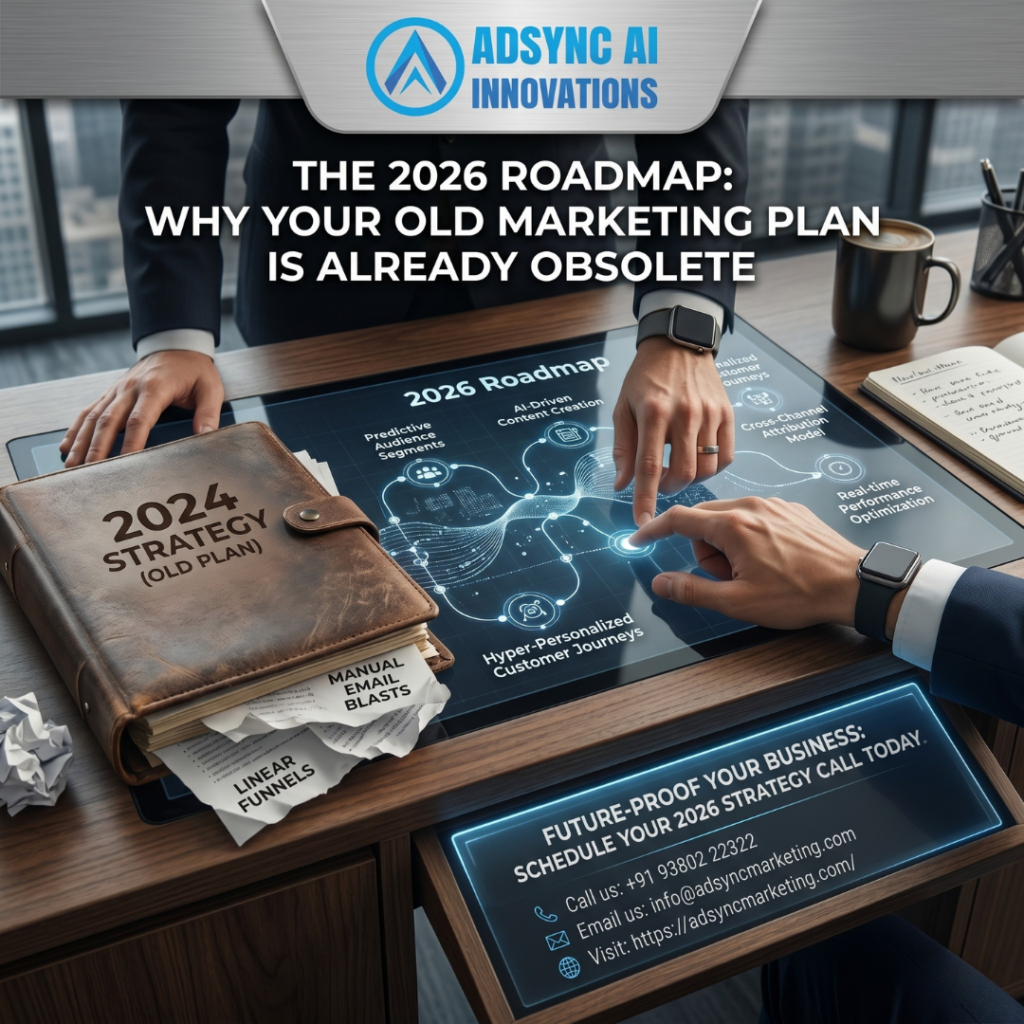
Take a look at the marketing strategy you are using right now. Does it look suspiciously similar to the one you were using in 2023 or 2024?
If the answer is yes, your business is in a vulnerable position.
The digital landscape no longer just evolves; it shifts at breakneck speed. Over the last two years, we have seen a massive revolution in artificial intelligence, a complete overhaul of how search engines display results, and a drastic change in consumer privacy laws.
The tactics that brought you a flood of cheap leads and easy website traffic a few years ago are now actively draining your budget. If you are still relying on a dated playbook, you aren’t just standing still—you are actively losing market share to your competitors.
Here is exactly what has changed in the digital marketing world, and the roadmap you need to follow to dominate in 2026 and beyond.
TL;DR: The Quick Takeaways
- Search is Conversational: Search engines use AI to provide direct answers. You need to optimize for “zero-click” searches and voice queries.
- First-Party Data is King: With strict privacy laws and the death of tracking cookies, owning your audience’s contact info (emails/SMS) is non-negotiable.
- Generic Content is Dead: AI can write 100 generic blog posts in an hour. To stand out, you need deep human expertise and unique perspectives.
- Short-Form Video is the Baseline: Video is no longer an “extra” feature of your strategy; it is the absolute foundation of how modern consumers discover brands.
1. The AI Search Revolution (and “Zero-Click” Searches)
A few years ago, someone would Google a question, see a list of ten blue links, click your website, and read your article.
Today, Google and other search engines are heavily using AI. When a user asks a question, the AI reads your website and summarizes the answer right there on the search results page. The user gets their answer and never actually clicks through to your website. This is called a “Zero-Click Search.“
If your entire SEO strategy relies on answering basic, dictionary-level questions, your website traffic is going to plummet.
The Action Step: Shift your SEO strategy toward deep, experience-based content. AI can summarize facts, but it cannot share real-world case studies, personal opinions, or highly specific strategic advice. Write about the complex problems your clients face that a robot cannot easily summarize in two sentences.
2. The Era of First-Party Data
For years, digital advertisers relied on “third-party cookies”—little pieces of tracking code that followed users around the internet so you could serve them highly targeted ads.
Due to massive changes in consumer privacy laws and updates to web browsers, that era is over. It is harder and more expensive than ever to track user behavior across the web. If you are entirely dependent on Facebook or Google’s algorithms to find your customers, your Cost Per Acquisition is going to skyrocket.
The Action Step: You must build an “owned audience.” This means collecting First-Party Data directly from your customers. Focus your ad spend on getting people to share their email address or phone number in exchange for a high-value resource (e.g., a free industry report or a discount code). Once you own that contact information, you can market to them forever without paying another Rupee to an advertising platform.
3. Hyper-Personalization Over Mass Blasts
Consumers have developed an incredibly strong filter for corporate spam. If you send an email blast to 10,000 people with the same generic subject line and offer, it will go straight to the promotions folder—or worse, the spam folder.
In 2026, consumers expect brands to know exactly what they want. If a customer previously bought a software package tailored for the real estate industry, they do not want an email promoting a new feature designed for the restaurant industry.
The Action Step: Segment your email lists and advertising audiences by behavior. Use marketing automation tools to send highly specific messages based on the exact pages a user visited on your website or the specific products they purchased in the past. Speak to their unique problem, not the general public.
4. Authenticity Beats AI-Generated Fluff
Because AI tools have made it so easy to generate content, the internet is currently flooded with millions of perfectly polished, robotic-sounding articles and social media posts.
The paradox is that as AI content becomes more common, the value of raw, unpolished human authenticity skyrockets. Consumers are craving real connection. They want to see the messy desk, hear the unscripted video, and know that a real human being is standing behind the product or service they are buying.
The Action Step: Put your face on camera. Stop hiding behind stock photos and AI-generated graphics. Use short-form video (Reels, TikToks, YouTube Shorts) to share quick, valuable insights directly from you and your team.
Future-Proof Your Business Today
The rules of digital marketing have fundamentally changed, but the goal remains the same: getting the right message in front of the right person at the right time. The businesses that adapt to these new technologies will thrive, while those clinging to old strategies will slowly fade away.
Is your current marketing strategy stuck in the past? Don’t let rapid technological changes leave your business behind. The team at Adsync Marketing stays ahead of the curve, building agile, future-proof strategies that drive predictable revenue.
- Call us: +91 93802 22322
- Email us: info@adsyncmarketing.com
- Visit: https://adsyncmarketing.com/