
Picture yourself on stage in front of a stadium full of 50,000 people. The lighting is ideal, you have a microphone, and you are giving your finest pitch.
The only problem is that everyone in the crowd is asleep.
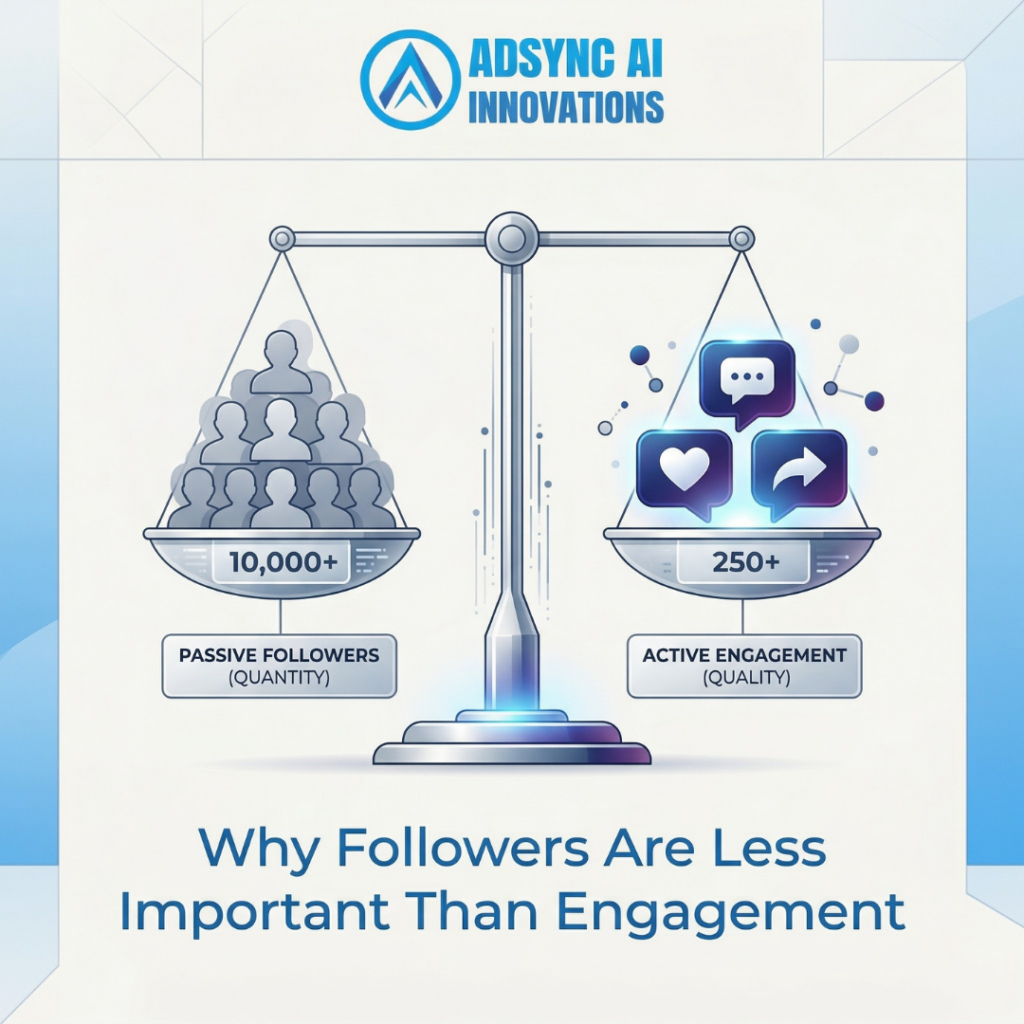
That’s what it’s like to have a lot of followers on social media, but no one interacts with you. Businesses have long seen the number of followers they have as the most important thing. It was the number that everyone was proud of. But in today’s digital world, having 10,000 followers who never interact with your postings is not a marketing plan; it’s a vanity statistic.
If you’re upset that your enormous following isn’t turning into real leads, phone calls, or website traffic, you need to rethink how you think about social media. This is why engagement is the most important measure and how to get your audience’s attention.
TL;DR: The Short List
- The Algorithm Doesn’t Care About Audience Size: LinkedIn, Instagram, and Facebook all put material that gets people to interact ahead of content from accounts with the most followers.
- Ghost Followers Hurt Your Brand: If you have thousands of inactive followers, the Algorithm will think your material is dull and stop showing it to people.
- “Likes” are no longer enough. Someone bookmarking your post for later or sharing it with a friend is what really gets you more attention.
- Micro-Communities Drive Macro-Profits: You don’t have to become viral; you just have to connect with the right people who need your services.
1. The Illusion of the Number of Followers
In the early days of social media, if you had 5,000 followers and you posted a picture, about 5,000 people saw it. That is not the case anymore.
Organic reach, or the number of people who read your article without you paying for ads, is lower than it has ever been. The Algorithm only reveals your content to a small part of your audience—usually between 5% and 10%. If the tiny test group doesn’t comment, share, or stay on the post right away, the platform stops exposing it to anyone else.
This implies that even if you have 20,000 followers, if they are bots, inactive accounts, or people who don’t care about your business, your posts will be a total failure.
The Action Step: Stop doing “Page Like” campaigns or signing up for follow-for-follow programs. A B2B company would rather have 500 local business owners as customers than 50,000 random accounts from around the world.
2. Why the Algorithm Wants You to Get Involved
The main purpose of social media sites is to keep people on their apps for as long as possible so they can show them more adverts.
How do they do that? By giving users stuff that they find fascinating. The computer grades based on how much people engage. When someone takes the time to leave an insightful remark, tag a friend, or download your infographic, it sends a huge positive signal to the platform. The Algorithm says, “This is great! Let’s show it to 1,000 additional people.”
Engagement is what gets your content in front of new, highly qualified people who aren’t already following you.
The Action Step: Change your content strategy from “broadcasting” to “talking.” Stop making announcements that only go one way. Instead of just publishing a link to a new blog, pick a quotation from the piece that is controversial or makes people think and ask your readers what they think about it.
3. The Strength of “Micro-Communities”
Let’s take a look at a real-life example. Picture two tax consultancy companies on LinkedIn.
15,000 people follow Firm A. Every day, they release generic, automated visuals with tax quotes. They get five likes for every post and no comments.
Firm B only has 800 people who follow them. The lead accountant, on the other hand, gives a very extensive discussion of new tax regulations that affect local healthcare clinics every week. Every post gets 30 comments from local doctors and clinic administrators asking specific questions, and the accountant answers each one.
Which company is really making money from social media? Firm B, no question. They have created a very active micro-community of their best customers.
The Action Step: Focus on a certain area. Don’t strive to make stuff that everyone will like. Make material that is very specialised and useful that addresses an issue for the exact group of people you want to reach.
4. How to Make Content That People Want to Read
You need to offer consumers a reason to stop scrolling if you want them to interact with your brand. Stock images that look like everyone else’s and business language won’t work. You need to make people feel something or give them something they can’t refuse.
- Take a side on an industry myth and ask polarising questions.
- Give people a look at the “Behind the Scenes”: Show the untidy, human side of how you run your business every day.
- Make “savable” content: Make infographics, checklists, or step-by-step guides that people will want to save and look at again later.
- Always respond: If someone takes the time to remark on your piece, don’t leave them waiting. If you want to keep the conversation going, ask a follow-up question.
Not Just Campaigns, Start Conversations
Social media was made to connect people, not merely to share information. When you stop worrying about how many followers you have and start thinking about the real people on the other side of the computer, your social media presence goes from being a waste of time to an effective way to get leads.
Are you getting likes on your social media posts, but not leads? You need to change the way you do things. The team at Adsync Marketing creates social media campaigns that get people involved and make a difference in your business.
- Please call us at: +91 93802 22322
- Send us an email at: info@adsyncmarketing.com
- Go to: https://adsyncmarketing.com/