
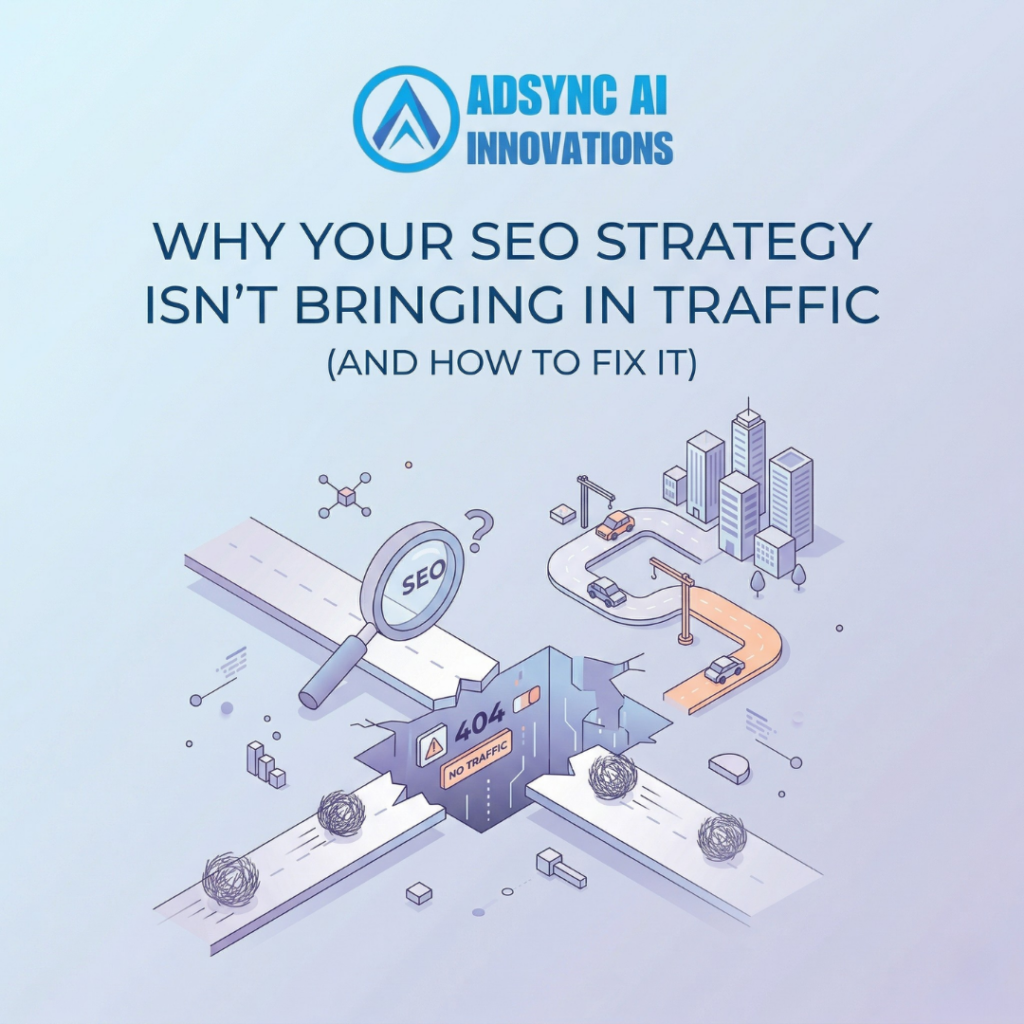
You invested in a beautiful new website. You diligently publish 500-word blog posts every week. You made sure your target keyword is in the title, the headers, and sprinkled throughout the text.
And yet, when you log into Google Analytics, the traffic line is completely flat.
It is incredibly frustrating to pour time, energy, and money into search engine optimisation only to feel like you are screaming into a void. It leaves many business owners wondering: Is SEO dead?
The short answer is no. But the harsh reality? The rigid, formulaic SEO tactics that worked brilliantly three years ago are actively harming your website today. Google has changed, and if your strategy hasn’t changed with it, you are handing your traffic over to your competitors.
Here are the five biggest reasons your SEO strategy is stalling out, and exactly how to fix them right now.
1. You Are Writing for Algorithms, Not Human Beings
The most common mistake businesses make is treating SEO like a rigid math equation. They stuff keywords awkwardly into sentences, creating content that reads as if a robot wrote it just to hit a specific “keyword density.”
Google’s algorithms have evolved massively thanks to AI and machine learning. Today, their primary goal is to serve the most helpful, readable, and authoritative answer to a human user. When a real person lands on a keyword-stuffed page, they immediately hit the “back” button. Google sees that rapid exit (your bounce rate) and penalises your ranking.
The Fix: Write naturally. Focus on answering the reader’s question comprehensively rather than forcing a keyword into every paragraph. Read your copy out loud—if it sounds clunky or unnatural to say, rewrite it. Use formatting like bullet points, short paragraphs, and bold text to make it easy on the eyes.
2. You Are Ignoring Search Intent
Let’s say you sell high-end espresso machines, and you desperately want to rank for the keyword “best espresso machine.” So, you write a beautifully detailed, 2,000-word history of how espresso was invented in Italy.
Will it rank? Absolutely not.
Why? Because someone searching for “best espresso machine” is in buying mode. They are looking for a buyer’s guide, a comparison list, or product reviews—not a history lesson. This is called Search Intent. If your content doesn’t match what the searcher is actually trying to achieve, Google will ignore it.
The Fix: Before you write a single word, Google your exact target keyword. Look closely at the top five results. Are they listicles? How-to guides? Product pages? You must match the format and intent of what Google is already rewarding on Page One.
3. You Lack High-Quality Backlinks (The Missing Link)
You can have the most beautifully designed, perfectly written website in your industry, but if no other reputable websites are linking to you, Google won’t trust you enough to rank you.
Think of a backlink as a digital vote of confidence. When a high-authority website links back to your domain, it signals to search engines that your business is a legitimate, trusted industry player. Many businesses publish endless content but completely ignore off-page SEO, which is why their pages never climb past page three.
The Fix: Stop waiting for links to happen naturally. You need a proactive link-building strategy. Focus on earning placements on relevant, high-quality websites in your industry through guest posting, digital PR, or creating highly shareable data. Remember: one link from a highly trusted site is worth a hundred links from low-quality directories.
4. Your Website is Failing the “Core Web Vitals” Test
In 2021, Google officially made user experience a ranking factor through an update called Core Web Vitals. They are now actively measuring how fast your page loads, how quickly it becomes interactive, and whether the layout jumps around while the user is trying to read.
If your website takes more than three seconds to load or isn’t perfectly optimised for mobile devices, users will leave immediately. Google knows this, and they will push your site down the rankings to protect their searchers from a bad experience.
The Fix: Compress your heavy images before uploading them. Use caching plugins if you are on WordPress. Most importantly, test your site on a smartphone to ensure buttons are easy to tap and text is readable without zooming.
5. You Are Neglecting Local SEO
If you serve a specific geographic area, competing against massive national brands for broad keywords is a losing battle. If you run a dental clinic, you don’t need traffic from halfway across the world; you need traffic from people in your city searching for a “dentist near me.”
Many businesses fail to optimise their local footprint, missing out on the easiest, highest-converting traffic available.
The Fix: Claim and fully optimise your Google Business Profile. Ensure your Name, Address, and Phone Number (NAP) are the same across every directory on the internet. Encourage your happy clients to leave Google reviews, as reviews are a massive ranking factor for local searches.
Stop Guessing with Your SEO
Modern SEO isn’t about tricking a search engine; it is about proving to Google that your website is the absolute best resource for your target audience. It requires a blend of technical performance, compelling human-centred content, and strong off-page authority.
If your current strategy is flatlining, it’s time to stop guessing and start diagnosing the actual problem.
Ready to uncover what’s holding your website back? Stop losing valuable traffic to your competitors. Reach out to the Adsync Marketing team today for a data-driven SEO strategy that actually moves the needle.
- Call us: +91 93802 22322
- Email us: info@adsyncmarketing.com
- Visit: https://adsyncmarketing.com/